Why would a market that has run on the same stretch of 2nd Street since before the country existed suddenly need a new rule about dogs?
If you shop Headhouse on Sundays, you already know the rule. Since March 2, 2025, pets have not been allowed inside the Shambles during market hours, with an exception carved out for service animals. If you missed the notice, you found out the practical way: a volunteer at the entrance asking you to leave the leash outside. The policy reads like a small thing. It isn't. It's the first visible sign that Society Hill's oldest public market has outgrown the building that made it famous.
A market older than the country it sits in
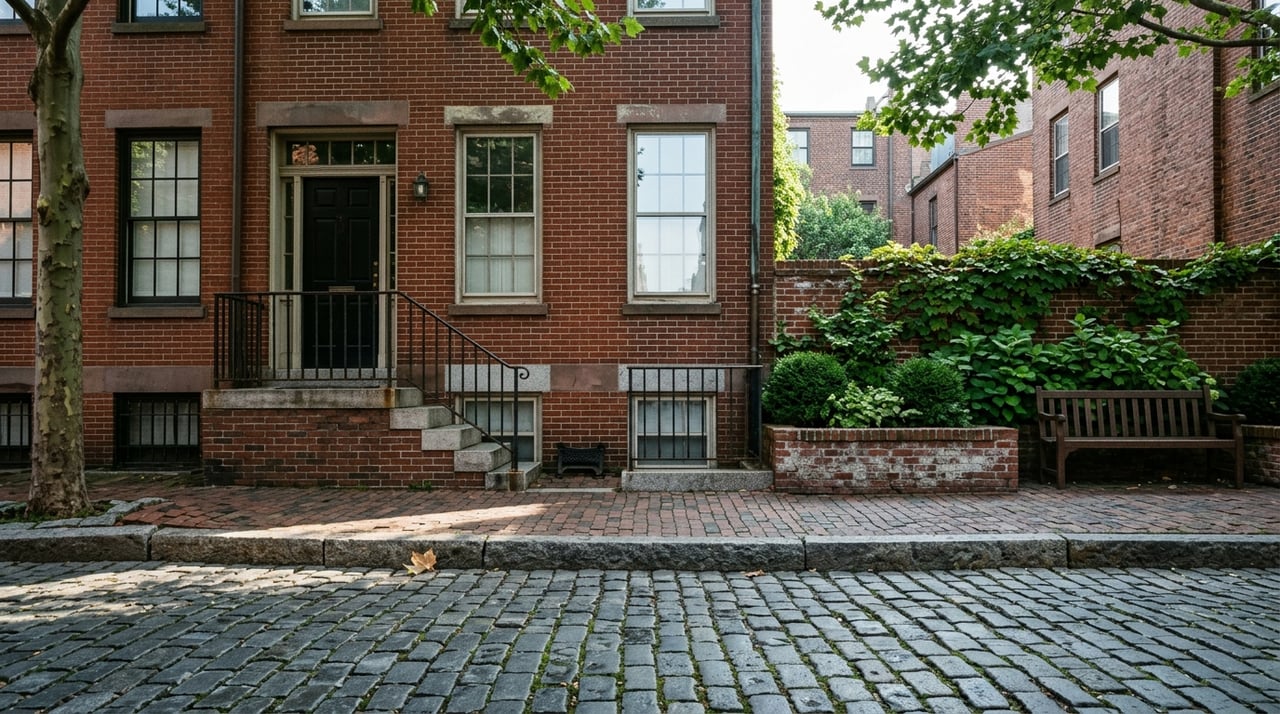
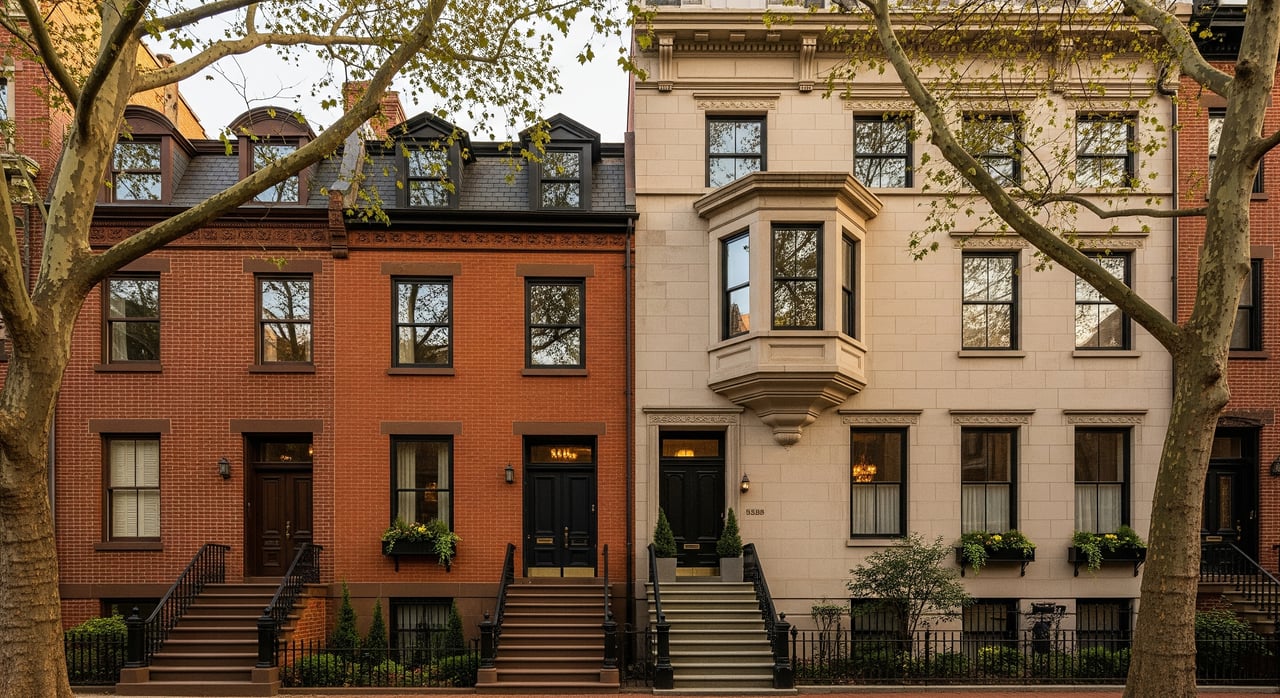
The Shambles, the covered colonnade where Headhouse Farmers Market sets up every Sunday, was built in 1745 and rebuilt in 1804. It's the surviving section of a longer structure that once ran all the way to South Street, and it earned National Historic Landmark status in 1966. The surrounding blocks, twenty-two contributing buildings across 9.9 acres, became a National Register historic district in 1972. This is not a modern pavilion that a market outgrows and a developer replaces. It's protected. The columns, the aisle width, the roofline: none of it moves without triggering a historic preservation review that would take years, if it happened at all.
That's the detail that makes the dog ban make sense. A market can't widen a 280-year-old colonnade to fit more strollers, more shopping carts, and more leashed dogs on a Sunday morning. It can only decide who gets to be in it.
The reason has nothing to do with dogs
The Food Trust, which has run Headhouse since 2007 and lists it as one of its largest markets, hasn't published a detailed rationale beyond the policy notice itself. But the reasoning lines up with a pattern seen at farmers markets nationwide facing the same physical constraint. A legal analysis of pet policies at markets around the country points to Headhouse specifically, noting that the ban was tied to accessibility: narrow walkways inside the Shambles make it difficult for wheelchair users and people with mobility aids to get through when the market is at its busiest, and some shoppers have lost their balance or been bumped by a well-meaning dog in tight quarters.
Read that against the building's own history and the logic holds. A colonnade sized for an 18th-century produce stall is now asked to hold a Sunday crowd, strollers, shopping bags, and dogs, all inside the same fixed footprint the Shambles has had since 1804. The market didn't get worse. It got more popular than the room it's in.
Why South Street can expand and Headhouse can't
A few blocks away, the neighborhood solved the exact same problem in the opposite way just this past weekend. On Saturday, September 26, the 700 block of South Street closed to cars from noon to 8 p.m. for the South Street Oktoberfest, organized by Brauhaus Schmitz and the South Street Headhouse District. When a street festival needs more room, the fix is straightforward: shut down a block, and the sidewalk becomes the venue.
Headhouse doesn't have that option. Its footprint is fixed by a landmark designation, not a traffic permit. It can't borrow a lane from 2nd Street the way South Street borrows one from itself. So the market manages growth through rules instead of square footage: no dogs during operating hours, a defined layout for vendor stalls, a staff contact for questions. It's the difference between a space you can temporarily expand and a space you can only ration more carefully.
The market is building its own governance
The dog policy isn't the only sign that Headhouse is professionalizing. The Food Trust is currently building a new Friends of Headhouse Farmers Market group, recruiting residents, shoppers, vendors, and regulars to help support programming, volunteer at events, assist with fundraising, and weigh in on the market's future. For questions about any of this, the market lists a named staff contact, Diana Minkus, reachable directly by email.
That's a notable shift for an institution that has largely run on informal neighborhood goodwill for decades. A market old enough to predate the Constitution is now setting up the kind of structured volunteer pipeline you'd expect from a much younger nonprofit. Read alongside the dog ban, it points to the same underlying fact: foot traffic has reached a level where informal management isn't enough, and the market needs both new rules and new hands to keep functioning inside a building it can't make any bigger.
What actually changes for your Sunday
If you've been going to Headhouse for years, here's what's different in practice:
- Dogs, including well-behaved ones on leash, aren't permitted inside the Shambles during the 10 a.m. to 2 p.m. Sunday market window. Service animals are the exception.
- The vendor lineup is shifting for the season. As the weather turns, expect more apples, squash, and greens on the tables and less of the summer stone fruit and tomatoes.
- If you want to get involved beyond shopping, the Friends of Headhouse group is actively recruiting, and Diana Minkus at the Food Trust is the point of contact for questions about the pet policy or anything else related to how the market runs.
- The market itself hasn't moved and isn't shrinking. It's still at 2nd and Lombard, still Sundays, still one of the largest of the Food Trust's markets citywide.
None of this touches the produce quality or the reason people keep showing up early to beat the crowd. What's changed is the level of management required to keep a 280-year-old room functioning for a 2025-sized Sunday crowd.
If you want a say in what happens next
The interesting part isn't the ban itself. It's what the ban reveals about a neighborhood institution bumping against the limits of its own preserved architecture, and choosing to solve that with policy and volunteers rather than waiting for a renovation that historic status will likely never allow. If you live near Society Hill and this is already part of your Sunday, the Friends of Headhouse group is the direct way to have input on how the market handles its next round of growing pains.
If Sunday mornings at Headhouse Square are already baked into how you think about a good weekend, Connor Gorman Real Estate can help you find a Society Hill address close enough to walk there with your coffee. The dog will have to wait outside the Shambles either way.